Is the Zillow Zestimate Accurate? (The Truth Behind the Value)
The Short Answer:
For on-market homes (listed for sale), the Zillow Zestimate is fairly accurate, with a median error rate of 1.9%. However, for off-market homes, the Zillow Zestimate error rate jumps to 7.5%. This means that if your home isn’t currently listed for sale, your Zillow Zestimate could be off by tens of thousands of dollars.
So what, exactly, is the Zillow Zestimate?
The Zillow Zestimate is the company’s proprietary home valuation tool. It uses a complex algorithm (updated frequently) to generate a Zillow Zestimate for over 100 million homes in the U.S. It relies on a mix of public data (tax records) and user-submitted data.
However, the Zillow Zestimate’s accuracy depends entirely on data availability. If Zillow doesn’t know you finished your basement or updated your kitchen, the Zillow Zestimate cannot price those upgrades.
There are a few terms that are important to understand:
- Zillow Zestimate: An approximate amount a computer predicts your home would sell for, based on the sales of “similar” nearby properties.
- True market value: What a buyer is actually willing to pay for a home today.
- List price/asking price: The amount set by the homeowner and their agent.
Because homes currently on the market have more verified data publicly available (like current photos and descriptions), their Zillow Zestimates tend to be much more accurate than off-market homes.
How accurate is the Zillow Zestimate in 2025?
The Zillow Zestimate is useful for a ballpark figure, but it is not an appraisal.
According to Zillow’s own data, the accuracy varies wildly depending on whether the home is listed for sale or not:
- On-Market Homes: The nationwide median error rate for the Zillow Zestimate is 1.9%.
- Off-Market Homes: The nationwide median error rate is 7.5%.
What does this error rate look like in real dollars?
A 7.5% error rate might sound small, but when applied to real estate prices, the gap is massive.
Take a home with a true market value of $600,000.
If the Zillow Zestimate is off by 7.5%, the estimated value could range from $555,000 to $645,000.
That is a $90,000 swing.
If you rely on that number to refinance your mortgage or set your list price, you could be leaving money on the table—or pricing yourself out of the market entirely.
The “Zillow Offers” Cautionary Tale
The biggest proof that the Zillow Zestimate isn’t perfect came from Zillow itself. Until late 2021, Zillow ran a business called Zillow Offers, where they used their own Zillow Zestimate algorithm to make cash offers on homes.
The result? Zillow lost hundreds of millions of dollars because their algorithm frequently overpaid for homes it couldn’t accurately value. Zillow ultimately shut down the iBuying branch of their business. If the company couldn’t trust the Zillow Zestimate enough to run a profitable business, you should be wary of trusting it blindly for your own net worth.
Zillow Zestimate vs. Redfin Estimate
Homeowners often ask: Is Redfin or the Zillow Zestimate more accurate?
Generally, Redfin is considered slightly more accurate for off-market homes. Redfin claims a median error rate of roughly 6.45% for off-market homes (compared to the Zillow Zestimate’s 7.5%) and about 2.1% for on-market homes.
Why the difference?
- Data Source: Redfin is a brokerage, meaning they have direct access to the MLS (Multiple Listing Service) in the markets they serve, which updates data in real-time.
- Zillow: While Zillow also has MLS feeds, the Zillow Zestimate algorithm historically relies heavily on user data and tax assessments, which can lag behind the market.
Recommendation: Don’t just check one. Look at your Zillow Zestimate, Redfin Estimate, and Realtor.com. If all three give you a similar number, you have a decent baseline. If they vary wildly, your home likely has unique features that algorithms can’t see.
What factors hurt Zillow Zestimate accuracy?
Why is the Zillow Zestimate often wrong? It usually comes down to things the computer can’t “see.”
1. Interior Condition & Renovations
“Zillow can’t see inside your home,” explains Baltimore-based listing agent June Piper-Brandon.
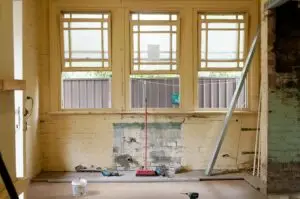
If you renovated your kitchen in 2023, the Zillow Zestimate doesn’t know unless you pulled a permit or uploaded photos.
- Scenario: You and your neighbor have identical houses. You spent $50k on a new kitchen; they have the original 1990s cabinets. The Zillow Zestimate will likely value both homes at the exact same price.
2. Neighborhood Nuances
Zillow treats neighborhoods as broad data sets. It often cannot distinguish between the “quiet street” and the “busy street” just one block over.
- The “Nice Block” Problem: If your home is on a desirable cul-de-sac but recent sales occurred on a busy main road nearby, the Zillow Zestimate algorithm may pull those lower comps, dragging your value down.
3. Rapid Market Changes
In a rapidly shifting market (like the post-2020 boom), algorithms lag. They rely on past sales (comps). If the market jumps 5% in a single month, the Zillow Zestimate will trail behind until enough new sales close to prove the trend.
Can you dispute or change your Zillow Zestimate?
You cannot strictly “dispute” the value to force Zillow to change it, but you can influence your Zillow Zestimate by updating your home’s data.
How to update your Zillow Zestimate:
- Claim your home: Create a user account on Zillow and verify you are the owner.
- Update facts: Correct the number of bedrooms, bathrooms, and square footage.
- Add improvements: Check boxes for remodels or new amenities (like A/C or a new roof).
Note: Zillow uses public tax records as the “truth.” If your tax record says you have 3 bedrooms but you actually have 4 (and never permitted the addition), the Zillow Zestimate may not update even if you claim it, because the official record contradicts you.
How to get a real home valuation
If you are serious about selling, do not use the Zillow Zestimate to set your price.
- Get a CMA (Comparative Market Analysis): A local real estate agent will do this for free. They look at the “comps” that the Zillow Zestimate uses, but they adjust for the condition, view, and “vibe” of the home.
- Order a Pre-Listing Appraisal: If you have a unique property (lots of land, custom features), pay $400-$600 for a licensed appraiser to give you a bank-grade valuation.
- Look at “Sold” listings, not “Active” ones: When doing your own research, ignore what neighbors are asking for their homes. Only look at what homes have actually sold for in the last 90 days.
Frequently Asked Questions (FAQ)
Why is my Zillow Zestimate lower than my neighbor’s?
Your neighbor may have more square footage recorded in tax records, or their home may have sold more recently, resetting the algorithm’s baseline. It is also possible the Zillow Zestimate has incorrect data regarding your bedroom/bathroom count.
Does a high Zillow Zestimate mean I can sell for that price?
Not necessarily. The Zillow Zestimate is a starting point, not an offer. In a buyer’s market, homes often sell for below the Zillow Zestimate. In a seller’s market, they may sell for significantly more.
Does the Zillow Zestimate include the finished basement?
Usually, no. Zillow relies on “above-grade” square footage from tax records. If your basement is finished but not classified as living space in county records, the Zillow Zestimate is likely valuing your home as if the basement were unfinished.
How often does the Zillow Zestimate update?
The Zillow Zestimate updates daily for on-market homes and usually once a week for off-market homes, depending on when new data (like nearby sales) becomes available.